When water pours into your home, the panic sets in fast. Do you call your insurance company first? Start pulling up carpet yourself? Wait it out and hope it dries on its own? Most homeowners have never been through this before, so they have no idea what a professional flood damage restoration process actually looks like – or how much of it happens in the first few hours.
Here’s a realistic walkthrough of what happens from the moment you call for flood damage restoration to the day your home is back to normal.
Step 1: The Emergency Call and Initial Assessment
The first thing that happens after you call is triage. A 24/7 emergency response team will ask a handful of quick questions before they even arrive: where the water is coming from, roughly how much of the home is affected, whether the water is clean (a burst pipe) or contaminated (sewage backup or floodwater from outside), and whether the electricity needs to be shut off for safety.
This matters because the response plan is different depending on the water source. Clean water from a supply line is a very different job than storm floodwater that’s carried in mud, bacteria, and debris – the second kind requires more aggressive sewage backup removal and disinfection procedures, not just drying.
Once the crew arrives, the real assessment starts. Technicians use moisture meters and thermal imaging cameras to map out exactly where water has traveled – which is almost never limited to what’s visible. Water wicks up drywall, seeps under flooring, and pools inside wall cavities long before it shows any surface signs. This is where moisture detection tools do the real work: they catch the hidden pockets that, left untreated, turn into mold problems weeks later.
Step 2: Water Extraction
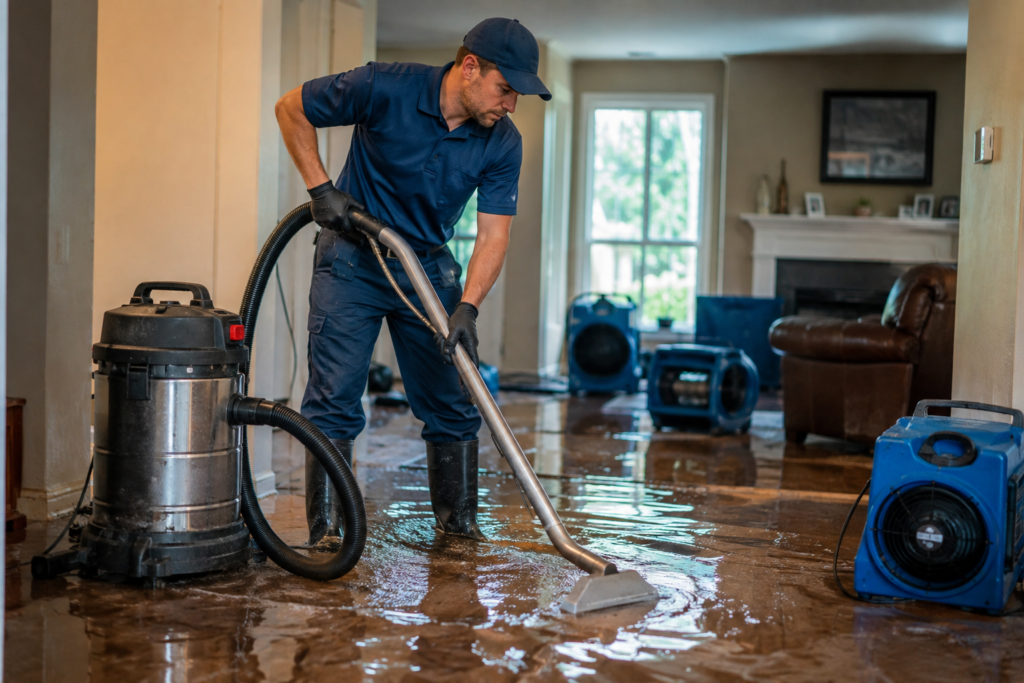
With the scope mapped out, extraction begins immediately. Standing water is removed first, using submersible pumps for anything more than an inch or two deep, and high-powered wet vacuums for shallower water and saturated carpet or padding.
Speed matters here more than almost any other stage. Water that sits for more than 24-48 hours dramatically increases the odds of secondary damage – swelling in engineered wood, staining in drywall, and the start of mold growth. This is why response time is often the single biggest factor in how much of your home ends up needing full replacement versus just drying and cleaning.
If the flooding reached the lower level of the house, basement flood restoration follows a slightly different playbook, since basements dry more slowly and are more prone to trapped moisture behind finished walls.
Step 3: Drying and Dehumidification
This is the stage most homeowners underestimate. Extraction removes the water you can see. Drying removes the water you can’t – the moisture that’s already soaked into subfloors, framing, insulation, and drywall.
Industrial air movers get positioned to create continuous airflow across wet surfaces, while commercial dehumidifiers pull moisture out of the air itself so it doesn’t just resettle somewhere else. In Atlanta’s humid climate, this step typically takes longer than people expect – often 3 to 5 days, sometimes longer for dense materials like hardwood subfloor or plaster walls.
Technicians don’t just set up equipment and leave. They come back to take moisture readings daily, comparing them against a dry standard for each material, and they don’t consider the job done until those readings confirm the structure is actually dry – not just dry to the touch.
Step 4: Cleaning, Sanitizing, and Odor Control
Once everything is dry, attention turns to cleaning and sanitizing every surface the water touched. This step looks very different depending on whether the water was clean or contaminated.
For contaminated water – sewage, storm floodwater, or anything that sat for an extended period – this includes antimicrobial and antibacterial treatments to eliminate bacteria, along with post-flood disinfection of surfaces, HVAC components, and anything porous that came into contact with the water.
Odor is often the most persistent complaint after a flood, and it’s rarely just “musty smell” – it’s usually a sign that moisture or bacteria is still present somewhere. Legitimate odor elimination addresses the source, not just the smell, which is why it’s paired with thorough drying rather than done as a standalone fragrance treatment.
If mold has already started forming – which can happen in as little as 24-48 hours in Georgia’s climate – this is also the stage where mold remediation begins, isolating and treating affected areas before they spread further.
Step 5: Restoration and Repairs
With the property clean, dry, and sanitized, restoration begins – the actual rebuilding of anything that was damaged beyond drying. This is the widest-ranging stage, and what it includes depends entirely on how bad the damage was.
Common repair work includes:
- Drywall and ceiling repair – cutting out and replacing sections that absorbed too much water to save, following wall and ceiling restoration protocols
- Flooring repair or replacement – carpet, padding, and in some cases subfloor, along with hardwood floor refinishing for wood floors that buckled or cupped
- Content restoration – furniture, documents, and electronics that were affected, which is its own specialized process (see document recovery and electronics drying)
- Kitchen or bathroom-specific repairs – cabinetry, subfloor, and fixtures, which come up often given how frequently these rooms are the source of the original leak (see kitchen flood cleanup and bathroom water restoration)
A good restoration team walks you through exactly what’s being repaired versus replaced, and why — not every water-damaged material needs to be torn out. Drywall below the waterline in a contaminated-water event usually does; solid wood trim that dried properly often doesn’t.
Step 6: Insurance Documentation
Running alongside all of the above is the paperwork that makes or breaks your claim. Photos and moisture readings should be documented at every stage – before extraction, during drying, and after repairs – because insurance adjusters rely heavily on that record to approve coverage.
This is where insurance claim assistance matters. A restoration company that documents thoroughly and communicates directly with your adjuster tends to move claims faster and reduces the chance of a denied or reduced payout over a documentation gap.
How Long Does the Whole Process Take?
For a moderate flood – a few rooms, no structural damage – most homes go from first call to fully dry within 3-5 days, with repairs adding another 1-3 weeks depending on how much rebuilding is needed. Larger floods, basement flooding, or anything involving contaminated water typically take longer, since drying has to be verified more conservatively and more materials usually need replacing rather than just cleaning.
What Atlanta Homeowners Should Do in the First Hour
If you’re dealing with active flooding right now, the sequence that matters most is:
- Shut off the water source if it’s a plumbing failure, and shut off electricity to the affected area if there’s any risk of water contacting outlets or wiring
- Call a restoration team immediately – don’t wait to see if it dries on its own
- Take photos and video of the damage before anything is moved or cleaned, for your insurance file
- Avoid walking through standing water if there’s any chance it’s contaminated (sewage backup, floodwater from outside)
Flood damage moves fast, but so does the right response. The difference between a full recovery and a much bigger repair bill usually comes down to how quickly extraction and drying start – which is exactly why the process above begins the moment you call, not the moment someone shows up.
Facing flood damage right now? Contact GA Water Damage Restoration Pros for 24/7 emergency flood damage restoration across metro Atlanta.
Leave a Reply