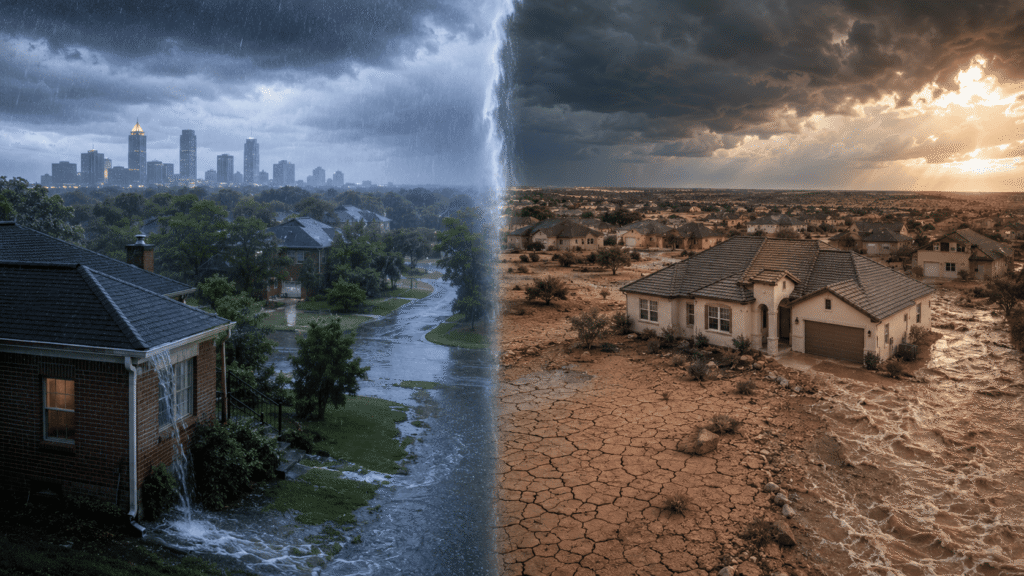
If you’ve lived in Atlanta for any length of time, you already know the rhythm of the seasons here: humid summers, sudden thunderstorms, and the occasional ice event that catches everyone off guard. But what you might not realize is just how differently water damage behaves in other parts of the country – even within the same general climate zone. Take Central Texas, for example. Cities like Killeen sit in a very different weather pattern than metro Atlanta, yet homeowners there face many of the same underlying risks, just triggered by different causes.
Understanding these regional differences isn’t just an interesting weather trivia exercise. It actually helps explain why your home is vulnerable to certain types of water intrusion, and what you can do to protect it before the next storm, freeze, or plumbing failure hits.
Atlanta’s Climate: Humidity, Heavy Rain, and Aging Infrastructure
Atlanta sits in a humid subtropical climate, which means moisture is a near-constant companion. Summers bring intense afternoon thunderstorms that can dump several inches of rain in under an hour, overwhelming gutters, storm drains, and aging municipal infrastructure. Add in the city’s hilly topography and a mix of historic homes with newer construction, and you get a recipe for water finding its way into basements, crawlspaces, and attics in more ways than most homeowners expect.
Winter brings a different kind of risk. While Atlanta doesn’t see the deep freezes of the northern states, occasional cold snaps are enough to burst poorly insulated pipes, especially in older homes never designed with freeze protection in mind. Combine that with humidity-driven mold remediation concerns that linger long after the water itself is gone, and Atlanta homeowners are dealing with a year-round water damage calendar rather than a single “storm season.”
Central Texas: A Different Climate, Similar Headaches
Central Texas, including cities like Killeen, operates under a semi-arid to humid subtropical mix, but the practical experience for homeowners looks different from Atlanta’s. Rainfall tends to be less frequent but far more intense when it arrives, often in the form of flash flooding events that can overwhelm drainage systems in a matter of minutes. The region’s clay-heavy soil doesn’t absorb water quickly, which means runoff pools around foundations and can seep into homes that would otherwise seem well protected.
Central Texas also deals with a phenomenon Atlanta rarely sees at the same scale: extreme temperature swings within short windows. A cold front can drop temperatures by 30 or more degrees in a single day, stressing pipes and HVAC systems that were running in the opposite direction just hours earlier. This kind of thermal whiplash is a major contributor to burst pipes and HVAC-related leaks throughout the region.
For homeowners in that area dealing with flooding, burst pipes, or storm-driven leaks, working with a local specialist like the team at Killeen Water Damage Restoration makes a real difference, since regional expertise means faster identification of the specific failure points common to Central Texas homes.
Why Regional Climate Patterns Matter for Water Damage Prevention
It’s tempting to think of water damage as a one-size-fits-all problem: water gets in, you dry it out, you fix the source. But the underlying causes – and therefore the best prevention strategies – shift significantly based on regional climate.
In Atlanta, the priority is usually managing volume. Heavy, fast-moving rain needs somewhere to go, and when gutters, grading, or storm damage restoration plans fail to account for that volume, water finds the path of least resistance, which is often straight into a basement or crawlspace.
In Central Texas, the priority shifts toward managing extremes. Flash floods test drainage capacity in short, intense bursts, while temperature swings test the physical resilience of plumbing and HVAC systems. A pipe that survives a Texas summer without issue might still fail the moment a sudden cold front rolls through.
This is part of why national one-size-fits-all advice about water damage prevention often falls short. A homeowner in Buckhead and a homeowner in Killeen could both experience a “burst pipe” claim, but the contributing factors, the timing, and even the repair approach can look quite different.
Shared Risk Factors Across Both Regions
Despite the differences, Atlanta and Central Texas share several risk factors that every homeowner should know about regardless of zip code.
Aging plumbing is a universal vulnerability. Whether it’s an older home in a historic Atlanta neighborhood or a property built decades ago in Central Texas, pipes that have outlived their expected lifespan are far more likely to fail under stress, whether that stress comes from a hard freeze or a sudden pressure spike during a storm.
Appliance flood damage is another shared culprit. Water heaters, washing machines, and dishwashers don’t care what climate zone they’re in – a failed supply line or worn-out hose can cause significant damage in Atlanta just as easily as it can in Killeen.
Humidity-related secondary damage also connects the two regions. Even though the triggering events differ, both Atlanta’s subtropical humidity and Central Texas’s post-flood moisture create ideal conditions for mold growth if drying and dehumidification services aren’t handled quickly and thoroughly.
What This Means for Your Home
If you live in the Atlanta area, understanding your specific climate risks means paying closer attention to drainage, gutter maintenance, and the condition of older plumbing systems, especially heading into Georgia’s intense summer storm season. Regular moisture detection checks can catch small leaks before they become major structural issues.
If you’re comparing notes with friends or family in Central Texas, you’ll notice their concerns lean more toward foundation protection, flash-flood preparedness, and pipe insulation ahead of sudden cold fronts. Either way, the underlying lesson is the same: water damage prevention isn’t generic. It’s shaped by the specific climate patterns of where you live, and the most effective protection comes from understanding those patterns rather than relying on broad national advice.
When Water Damage Strikes, Local Expertise Matters
No matter which region you call home, one thing holds true everywhere: when water damage happens, speed and local knowledge make all the difference. A restoration team that understands Atlanta’s humidity-driven mold risks, or one that understands Central Texas’s flash-flood and freeze-thaw cycles, will identify the root cause faster and prevent the kind of repeat damage that comes from an incomplete repair.
If you’re in the Atlanta metro area and dealing with water damage from a storm, burst pipe, or appliance failure, our team is available 24/7 to help. And if you know someone in the Killeen, Texas area facing similar issues, the team at Killeen Water Damage Restoration brings that same kind of regional expertise to Central Texas homeowners. Understanding your climate is the first step. Acting quickly when damage occurs is the second – and most important – one.
Don’t wait until a small leak becomes a major flood damage cleanup project. Contact us today for a free inspection and find out how Atlanta’s unique climate may be putting your home at risk.
Leave a Reply